A field note in five parts
Anatomy of an Ambrosia
Honey-sweet, crisp and aromatic—a chance seedling that became a modern orchard favorite.
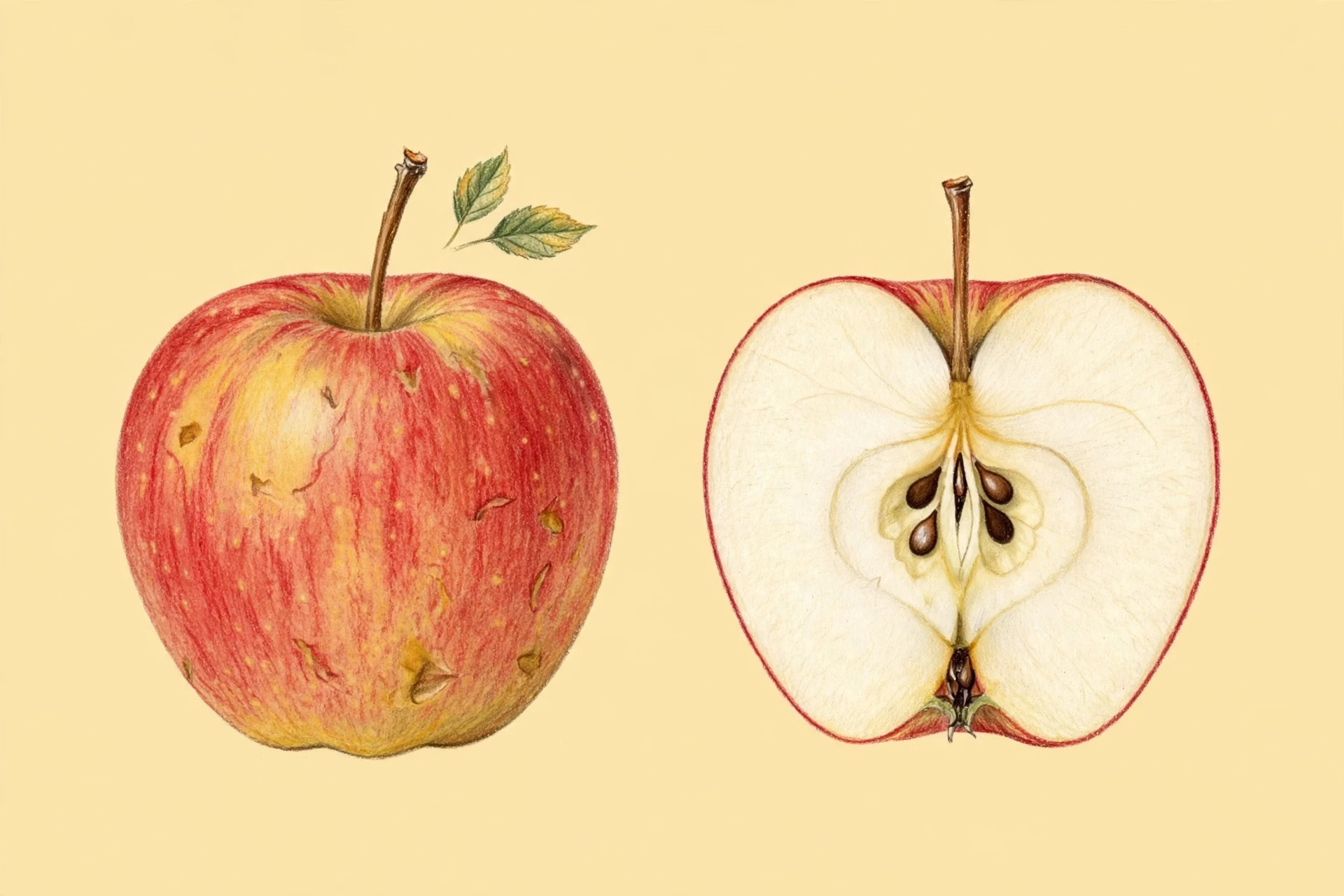
From skin
to seed.
Select a numbered marker—or a part in the index—to reveal what each layer does and what makes this cultivar distinctive.
Smooth and glossy, with a bright red blush and faint stripes over a cream-to-yellow ground.
Cream-colored, firm, crisp and juicy. Ambrosia flesh shows relatively little browning after cutting.
The papery central chambers—called locules—form a star-like arrangement around the fruit’s axis.
Mature seeds are brown. A seed grows a genetically new apple; orchard trees are reproduced by grafting or budding to preserve the cultivar.
The stalk once connected the apple to its spur, carrying water and sugars into the developing fruit.
A lucky find in British Columbia.
Ambrosia began as a naturally occurring chance seedling in Wilfrid and Sally Mennell’s orchard in Cawston, British Columbia. Its parentage remains unconfirmed; Starking Delicious and Golden Delicious are considered possible parents. Budding in 1990 preserved the promising seedling’s traits for later trees.
Ambrosia Inc — Orders
Request a quote.
Tell us where to send it and how much you need. We’ll reply with pricing and availability for boxes and crates of fresh Ambrosia apples.
Another orchard favorite
Meet Honey Crisp.
If Ambrosia is the mellow one, Honey Crisp is its bolder counterpart — explosively crisp and juicy, with a bright sweet-tart bite in every slice. It has a page of its own, from the folks at Honey Crisp Inc.
By Honey Crisp Inc — our counterpart orchard.